Alibaba Supplier Verification: What the Programme Covers, What It Is Not Designed to Cover, and How to Add a Second Layer
Alibaba's Verified Supplier programme runs a structured on-site inspection across more than 100 items in eight capability categories. It is a credible quality screen for what it covers. For some questions — registry status over time, beneficial-ownership networks, external trade-history validation — the programme is not designed to be the answer. Here is the published scope, the gap, and how to close it.
14 min read
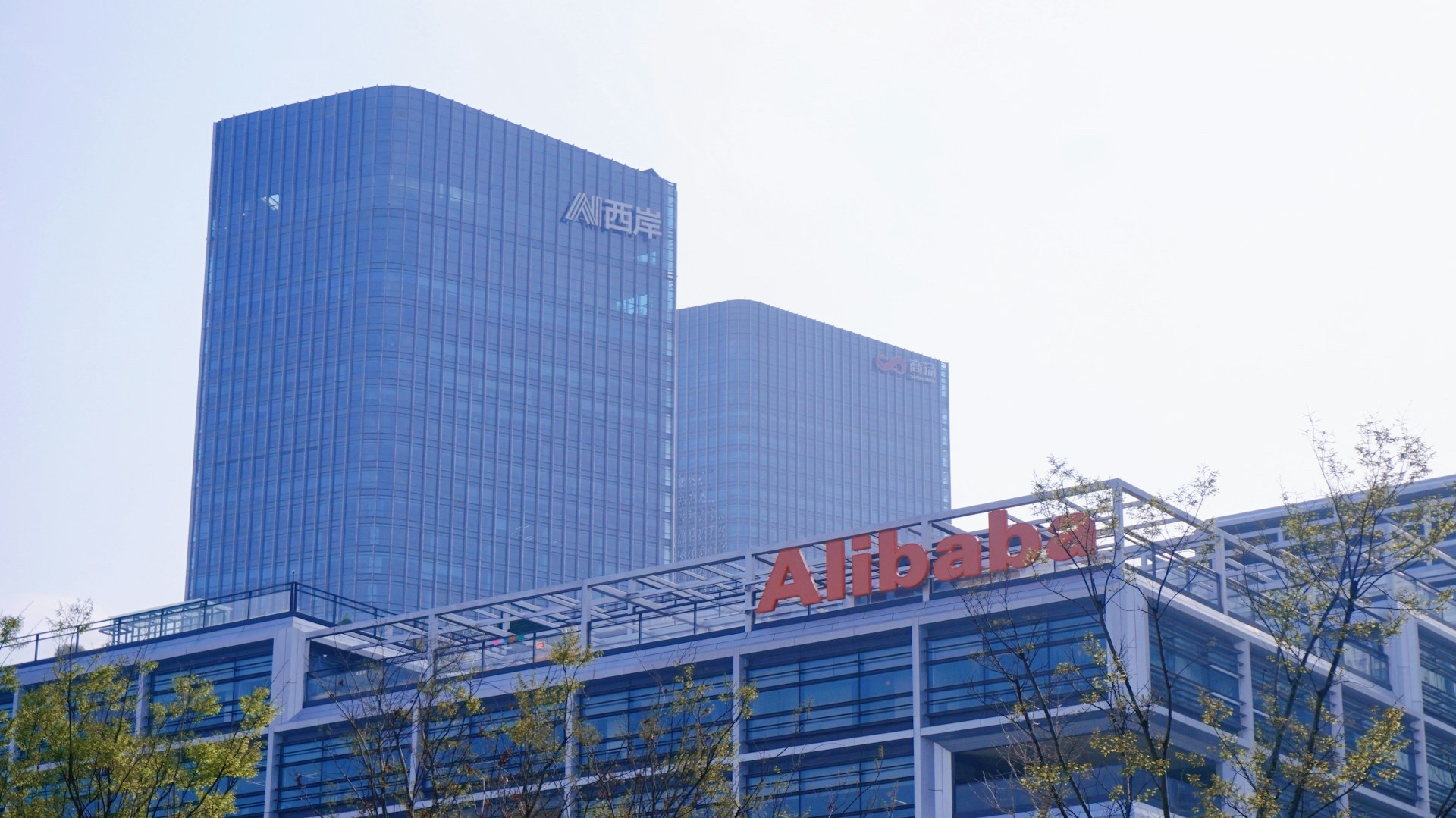
Alibaba's Verified Supplier badge is the single most visible trust signal in B2B sourcing from China. It is also one of the most frequently misread. Many foreign buyers see the tag and read it as a guarantee of every dimension of the relationship — that the company is real, the products are as described, the orders will arrive, and the platform stands behind it all. The reality, as Alibaba's own programme documentation describes, is more specific: a structured, audited capability assessment at a defined point in time. That is genuinely useful. It is also not the same instrument as an independent supplier verification report on the legal entity behind the storefront. This guide explains what each instrument does, where they meet, and how to use them together.
Throughout this article we cite Alibaba's own published programme documentation for any factual claim about the Verified Supplier programme, Gold Supplier, or Trade Assurance. Sources are listed at the end. For perspectives that come from buyer practice rather than Alibaba's documentation, we say so.
What the Verified Supplier programme actually does
Per Alibaba's published programme description, the Verified Supplier process runs in three stages.
Online verification. Before any on-site visit, Alibaba conducts background research on the supplier's business — online checks, phone contact, website review, and database lookups against public registry sources. The aim is to confirm the supplier exists as a legally registered business at the address claimed.
Certificate authentication. Suppliers upload documentary proof — typically including the ISO 9001 certificate plus product-specific certificates, inspection reports, and trademark or patent documents. These are uploaded to a designated site for authentication as part of the programme.
On-site inspection. A third-party inspection firm — drawn from a small set of international testing and certification firms that Alibaba names publicly in its programme documentation — visits the supplier's premises to conduct an on-site audit. Per Alibaba's published seller-side description, the audit covers more than 100 items across eight categories:
- After-sales guarantee
- Company profile
- Main products
- Management quality
- Production capabilities
- Research and development capabilities
- Service capabilities
- Supply chain capabilities
The inspector conducts interviews with employees and supervisors, examines operations across finance and marketing functions where applicable, and at factory premises specifically inspects R&D, production lines, workshops and quality-control lines. The output is a written assessment report. Alibaba also offers an optional on-site video showing the working environment, which buyers can review on the storefront.
Once the badge is issued, buyers see the Verified Supplier tag in search results, on the product detail page, on the supplier's business card, and on the supplier mini-site. The assessment report and on-site video are visible from the storefront.
This is a real audit. For the questions it is designed to answer — does the supplier exist, do the premises match the claimed description, does the operation appear capable of producing what the storefront advertises — it is structured, third-party-administered and documentary. The widely circulated buyer reaction "the badge is meaningless" is not accurate to what Alibaba's published programme actually contains.
What the programme is not designed to cover
Equally important is what falls outside the published programme scope. The audit is a snapshot — performed at a defined point in time, on a paid renewal cycle. Some categories of buyer-relevant question sit naturally outside that frame.
Continuous operating status. The Verified Supplier audit is a periodic event. Between cycles, a company can be added to the Chinese registry's abnormal operations list (典型 examples are late annual filings, address discrepancies, or unresponded regulator inquiries) and still display the badge until the next renewal. The programme is not designed as a continuous-monitoring service.
Beneficial-ownership networks. Alibaba's published audit attaches to a specific legal entity at a specific address. It is not designed to trace the natural persons behind the legal representative back to all other entities those persons control. Where a single beneficial owner runs several trading entities, each appearing as an independent storefront, only the entity in front of the audit is in frame.
External trade-history records. The on-site capability assessment establishes what the supplier can do at the inspected premises. It is not a cross-reference against external shipping records to test what the registered legal entity has actually exported, in what categories, to which destinations, over what time horizons. That kind of historical-pattern check sits in the territory of supplier research, not on-site audit.
Financial and regulatory standing. The eight-category capability audit does not pull credit-history records, trade-debt records, or product-category-specific regulatory standing across all of the supplier's claimed destination markets. Companies can be in good legal standing on the registry and in commercial difficulty in their operations; the programme is not designed to surface the latter.
None of this is a defect of Alibaba's programme. These categories of question sit outside the natural scope of a capability audit. They are, however, exactly the categories that independent supplier research is built to answer — drawing on a different data source (the public Chinese registry and external trade records) using a different methodology (registry-trace, beneficial-ownership network mapping, historical-pattern matching).
The honest framing is: Alibaba's programme and independent supplier research are two different instruments. Each is good at what it is built for. Both are typically warranted for orders above the level where a failed shipment has material cost.
Where the gap has been visible: documented patterns in the public record
The argument that platform programmes leave specific buyer-side questions out of scope is not theoretical. Several public-record sources document what happens in the gap.
The US Trade Representative's "Notorious Markets" reviews. The USTR annual review names online and physical markets that are "reported to engage in or facilitate substantial trademark counterfeiting or copyright piracy." AliExpress — Alibaba Group's consumer-facing platform, which shares anti-counterfeiting tools and systems with other Alibaba platforms — was named on the 2021 and 2022 Notorious Markets Lists; rights holders cited "the continued lack of effective seller vetting and repeat infringer controls", with AliExpress described as "a dominant upstream distributor of counterfeit goods in wholesale quantities for online markets in the United States and other countries". AliExpress is C2C and D2C, structurally distinct from Alibaba.com's B2B marketplace, but the seller-vetting architecture is built at group level. Reading the USTR review carefully is a useful corrective to the assumption that platform-level controls are uniformly sufficient.
Kering v. Alibaba (US District Court, Southern District of New York, 2015). Kering — parent of Gucci, Yves Saint Laurent, Bottega Veneta, Balenciaga and others — filed a complaint alleging Alibaba knowingly facilitated the sale of counterfeit goods on its platforms. The filing, widely reported in trade press at the time, included specific claims such as authentic-style Gucci bags listed at $2 against retail prices in the high hundreds of dollars. The matter eventually moved toward cooperation between Kering and Alibaba on anti-counterfeiting work. The underlying point for buyers: even very large, well-resourced rights holders have had to take public legal action to surface platform-level enforcement gaps. The matters at issue concerned brand protection rather than B2B supplier verification specifically, but the public legal record on platform-level vetting is relevant context.
Class-action inquiries into Trade Assurance. US plaintiff firms have publicly announced class-action inquiries into whether Alibaba consistently honours its Trade Assurance policy. The pattern that drew attention: where the supplier refuses to agree to a refund, buyers report difficulty obtaining one through platform mediation despite Trade Assurance's stated protections. Inquiries of this kind are not findings of liability — they are signals that buyer-side experience with the protection mechanism has been the subject of public legal action.
Domestic consumer-protection reporting in China. Trade press reporting on a 2023 China Consumer Association assessment described a significant share of cross-border trade disputes as stemming from supplier identity fraud — buyers transacting with one entity while a different entity collects payment, or buyers discovering after the fact that the legal entity behind the storefront differed from the operating reality. China's own consumer-protection authority naming the pattern domestically is a useful signal of scale.
Two reading rules for this section. First, none of these sources establishes that Alibaba's Verified Supplier B2B programme has been found defective in a legal proceeding; they establish that buyer-side problems in the gap between platform attestation and on-the-ground reality have repeated long enough to attract regulator, legal-action and consumer-protection attention. Second, the appropriate response is not to avoid Alibaba; the platform is a genuinely useful sourcing surface used by hundreds of thousands of buyers worldwide. The appropriate response is to use the platform's protections for what they cover, and to add an independent layer for the categories of risk they are not built to cover. We plan to examine specific incident patterns and their buyer-side consequences in detail in a future Trade Signal issue.
Three patterns foreign buyers commonly report
Beyond what Alibaba's documentation describes, three failure patterns recur in B2B-sourcing forums, trade-press accounts and verification-practice case notes. None is unique to Alibaba and none reflects a defect in the platform's own programme; each is a category of risk that sits outside the on-site audit by design.
Quality drift between sample and bulk
Buyers regularly describe orders in which the sample was excellent, the bulk arrived with thinner material, looser tolerances, different colourway or different finish, and the resolution consumed weeks of project schedule. The platform's audit is not a sample-to-bulk consistency mechanism — it confirms capability, not order-by-order outcomes.
The complementary check is on the supplier's actual production track record across previous orders — what the registered entity has shipped, in what volumes, to which markets. Where the storefront's claimed specialty does not match its trade history, the divergence is a signal that the capability audit is not designed to surface.
Trading firm fulfilling orders via an upstream partner
A second recurring pattern: the storefront describes a factory; the inspection visited a factory; but the bulk order is in practice fulfilled from a different facility under a contracted production relationship. The on-site audit is correct about the premises it visited; the buyer is misled about who controls the production line that determines whether the order arrives.
The corrective check is in the Chinese registry: the registered scope of business field distinguishes manufacturing scope from wholesale and import-export scope. A storefront presenting itself as a manufacturer whose registered scope is wholesale and import-export only is not a manufacturer in Chinese legal terms, regardless of what the on-site visit observed at the time.
Identity drift across multiple entities
The third pattern, more often described by experienced sourcing operators than by first-time buyers: the legal entity behind the storefront has changed, or the same beneficial owners have rotated reputation across a small portfolio of sister entities over time. The audit attaches to one entity at one moment; the network sits at a level the audit is not designed to render.
The check that addresses this is a beneficial-ownership trace — identifying the natural persons behind the registered legal representative and listing all entities they control. This is standard supplier-research work, not platform-audit work.
These three patterns are described here not to claim they happen at any particular Alibaba supplier, but to map the categories of risk that sit outside the audit's design. Where they matter is on orders large enough that the cost of an unrecoverable problem exceeds the cost of layering on supplier research.
Trading firm versus factory: the most common honest misread
If a buyer takes only one operational point from this guide, this is the one with the highest yield. The single most consequential question to settle before contracting is whether the supplier is a manufacturer or a trading firm — and the answer is on the business licence, not in the marketing copy.
China's business registry encodes this in the registered scope of business field. Factories carry manufacturing scope — production, processing, or assembly of specific categories. Trading firms carry wholesale scope, and export-facing ones additionally carry import-export licence scope. Many storefronts describe themselves loosely; the registry record does not.
A real factory at the claimed output also shows a registered capital figure and a staff bracket consistent with that output. A storefront describing itself as a 200-employee factory while showing registered capital of 500,000 RMB and a staff bracket under fifty is presenting an inconsistent picture relative to the registry data. Reading the storefront against the licence resolves this in minutes.
Two clarifications are worth keeping in mind. First, neither pattern is inherently better. Established trading firms with long export histories and well-managed production partnerships serve foreign buyers reliably on standardised categories, where the value-add is logistics, order aggregation and quality oversight. Second, many Chinese suppliers operate hybrid structures — a registered trading entity plus a separately registered manufacturing entity under common ownership. Reading the registered scope of business confirms which legal entity is contracting, which is the operational question.
A second layer: registry, beneficial ownership, trade history
The independent supplier research layer that buyers commonly add — alongside, not instead of, the platform's own programmes — is built on three sources, each anchored on official Chinese registry data and external trade records.
Official Chinese registry data. Every Chinese company is registered with a unified social credit code (USCC) — an 18-character identifier governed by GB 32100-2015 — that links to publicly disclosed records including the registered name, registration number, legal representative, registered capital, paid-in capital, registered address, registered scope of business, operating status, and registration date, along with the change history of each. A registry pull cross-references the storefront's claims against this layer and surfaces inconsistencies.
Beneficial ownership and corporate network. Behind the registered legal representative are the actual beneficial owners — the natural persons in the equity register. Tracing from the legal entity to the beneficial owners and then out to all other entities those persons control is the most powerful single check available in supplier research. It surfaces sister entities, parent structures and patterns of recent ownership change.
External trade-history records. Public records of actual shipping activity — collected from customs filings, shipping manifests and trade-data aggregators — are the empirical test of what the registered legal entity has in fact exported, in what categories, to which destinations and over what time horizons. A storefront claiming category leadership without a matching shipping history is a signal worth examining.
A professionally produced supplier verification report compiles these three layers for a defined legal entity in a fixed report format. The cost is a small fraction of the value of any order over a few thousand US dollars and an order of magnitude smaller than the cost of a failed bulk order, a quality dispute that consumes a launch window, or a wire that does not produce goods.
Reading the business licence behind the storefront
Every Alibaba storefront is operated by a legally registered Chinese company, and every Chinese company has a business licence (营业执照) as the foundational public document of its legal existence. The fastest, cheapest, most under-used check in supplier evaluation is reading the licence carefully.
The unified social credit code (USCC) is an 18-character alphanumeric identifier governed by the GB 32100-2015 national standard. It is composed of: position 1, a single-character registration management department code (most exporters carry 9 for industrial and commercial registration); position 2, a single-character organisation category code; positions 3 to 8, a six-character administrative region code identifying the registration authority's location; positions 9 to 17, a nine-character entity identification code; and position 18, a check digit. The 18 characters use Arabic numerals and uppercase Latin letters, excluding I, O, Z, S and V.
The registered name is in Chinese. The supplier's English trade name on Alibaba is a marketing label with no legal status. The Chinese name on the licence is the legal entity. A contract signed with the marketing name is not a contract with the legal entity; the contract must reference the Chinese-name entity and include the USCC, or enforcement options narrow substantially.
The registered scope of business is the most under-read field on the licence. Beyond the factory-versus-trading-firm distinction discussed above, it discloses what else the company is registered to do — and frequently surfaces inconsistencies between the storefront's product range and the entity's actual registered activities.
The registered capital and the paid-in capital are two separate fields. The registered capital is the nominal commitment of the shareholders. The paid-in capital is what has actually been contributed. Many newer Chinese companies show high registered capital and low paid-in capital — the gap is material to assessing the real financial commitment behind the entity.
The operating status is a four-state enumeration on the registry: 在营 (in operation / active), 经营异常 (abnormal business operations), 吊销 (revoked) and 注销 (cancelled / deregistered). Suppliers in 经营异常 status — typically for missed annual filings, address discrepancies or unresponded regulator inquiries — are not necessarily disqualified, but the status warrants explanation before contract signing. 吊销 and 注销 are disqualifying.
A previous Trade Signal issue covers the business licence in further detail. The point here is that the licence is the document on which everything else rests.
Trade Assurance: what it covers, per the published policy
Alibaba's Trade Assurance is the platform's escrow mechanism and a meaningful protection layer for B2B transactions on Alibaba. Per the published policy:
Coverage. Trade Assurance covers refunds for orders that are unshipped, missing in transit, or arrive defective, damaged or otherwise not as described. The policy also provides shipping protection (delivery by the scheduled date or delay compensation) and after-sales services such as on-site installation, maintenance, repair and free replacement parts for eligible products.
Protection periods. Buyers may claim refunds within 30 days of delivery; Enterprise and Enterprise Pro buyers have 60 days. The quality-issue inspection window is typically 15 days after delivery. The initial buyer-supplier negotiation window before platform mediation is typically 3 days.
Dispute resolution. The first step is direct buyer-supplier negotiation. If that does not resolve the dispute, the case escalates to Alibaba platform mediation. For quality-related claims, the published policy indicates that an independent third-party inspection report is typically required as evidence.
Refund timelines. Once a refund application is approved, the refund is processed within 7 business days as a general rule, with specifics varying by payment method (credit card typically 10 working days; T/T 7; e-Checking 3; Pay Later 15).
Coverage limits. Trade Assurance operates with coverage limits per supplier, based on the supplier's qualification level and transaction history. For larger orders, buyers should confirm the supplier's coverage limit before contracting.
What Trade Assurance is excellent for: protecting first-order risk, escrow-style discipline on payment release, and providing a structured dispute path with documented platform mediation. What it is not designed to cover: consequential costs of a failed order (air-freight upgrades to recover schedule, lost retail launch windows, marketing spend already deployed, customer-facing commitments missed). For orders where the unrecoverable cost of failure substantially exceeds the order value, buyers commonly layer Trade Assurance with an independent supplier verification report.
When the badge does most of the work
A reasonable reading of the Verified Supplier programme is that it does substantial work for three classes of order.
First, on commodity categories with low specification variance — basic hardware, standard packaging, generic textiles — where the surface area for quality drift is narrow. A capability audit of a Verified Supplier in a commodity category is a high-yield screen.
Second, on small-volume first orders where the buyer is testing the supplier before scaling. The badge plus Trade Assurance is a sensible baseline; independent supplier research becomes the standard add-on at scaling volumes.
Third, on suppliers with long platform tenure — multi-year Verified Supplier status, accumulated buyer feedback, transaction volume visible on the storefront, and consistent product-category history. Long tenure on the platform is itself a signal that compounds with the audit.
The generalisation buyers should resist is assuming that what the programme does well in those three contexts extends to first-time, high-volume, high-specification orders where the unrecoverable cost of failure is large. There, the programme is one input among several.
The practical sequence
For an Alibaba supplier evaluation on an order above a few thousand US dollars or in a specification-sensitive category, the operational sequence buyers most commonly follow is:
- Read the storefront critically: registered scope of business (factory vs trading firm), age of the company, registered capital, claimed export markets versus product category.
- Request the business licence directly from the supplier and verify the unified social credit code, registered name, registered scope of business and operating status. Cross-check against the storefront's claims.
- Order a sample under documented specification and inspection criteria written into the contract.
- Before bulk payment, commission an independent supplier verification report drawing on official Chinese registry data, beneficial-ownership tracing and external trade-history records.
- Move bulk payment through Trade Assurance, tracking the 15-day quality inspection window and 30-day refund window actively. Inspect at port or pre-shipment.
Step 4 is the layer most foreign buyers are still adding by hand or skipping entirely. It is what Sinolinks Verify produces as a structured 18-section dossier, expert-reviewed and delivered in 24 hours at a fixed fee. The dossier sits alongside Alibaba's own programme outputs in a single workflow.
Order a verification report on your Alibaba supplier
Sources and methodology
Factual claims about Alibaba's Verified Supplier programme, Gold Supplier and Trade Assurance in this article are drawn from Alibaba's own published documentation. Claims about the structure of China's unified social credit code (USCC) draw on the GB 32100-2015 national standard. Where this article describes buyer-side experience or patterns not stated in Alibaba's documentation, the framing makes the attribution explicit.
Primary sources consulted:
- Alibaba seller-side programme page on Verified Supplier (seller.alibaba.com) — for inspection scope (eight capability categories, more than 100 items) and the three-step process (online verification, certificate authentication, on-site inspection).
- Alibaba US-facing Verified Supplier page (us.alibaba.com/verified-supplier) — for the published tier structure (Standard, Premium, Verified Supplier) and price-range disclosure.
- Alibaba "How are Alibaba.com suppliers verified" buyer-facing article (reads.alibaba.com) — for the use of named third-party verification partners (international testing and certification firms publicly listed in Alibaba's programme documentation).
- Alibaba Gold Supplier help page (alibaba.com/help/gold_supplier.html) — for the description of the Gold Supplier paid membership and annual tenure display.
- Alibaba Trade Assurance policy documentation (tradeassurance.alibaba.com) — for protection periods (30-day refund, 60-day for Enterprise and Enterprise Pro, 15-day inspection, 3-day negotiation), covered scenarios, dispute resolution flow and refund timelines.
- GB 32100-2015, "Coding Rules for the Unified Social Credit Codes of Legal Persons and Other Organizations" — for the USCC 18-character structure.
- Office of the United States Trade Representative, 2021 and 2022 Reviews of Notorious Markets for Counterfeiting and Piracy (ustr.gov) — for the AliExpress listings and the cited language on seller-vetting concerns.
- Kering S.A. et al. v. Alibaba Group Holding Ltd. et al., US District Court, Southern District of New York, 2015 — public court filing and contemporaneous trade-press coverage (Business of Fashion, Retail Dive, Computerworld, The Fashion Law).
- Published class-action inquiry notices regarding Alibaba Trade Assurance (US plaintiff firm publications) — for the existence and posture of buyer-side legal action surrounding the protection mechanism.
- Trade-press reporting on the 2023 China Consumer Association assessment of cross-border trade disputes — for domestic Chinese consumer-protection framing of supplier-identity fraud (primary CCA source to be re-verified for the next refresh).
This guide is updated quarterly. Where Alibaba's published programme materials change, the next quarterly refresh will reflect the change and re-cite.
Frequently asked
Eight questions buyers ask before they verify
- What does 'Verified Supplier' on Alibaba actually mean?
- Per Alibaba's published programme description, the Verified Supplier badge is granted after a paid third-party on-site audit covering more than 100 items across eight categories: after-sales guarantee, company profile, main products, management quality, production capabilities, R&D capabilities, service capabilities, and supply chain capabilities. Alibaba's verification partners are international testing and certification firms publicly named in its programme documentation. Buyers see a Verified Supplier tag, the assessment report, and on-site video on the storefront.
- Are Verified Suppliers on Alibaba reliable?
- Alibaba's verification is a structured screen against suppliers with no real operating premises, no production capability, and no documentary trail — which are the most basic categories of misrepresentation. As such it raises the floor meaningfully. It is a point-in-time audit of capability and identity, not a continuous monitoring service, and not equivalent to an independent supplier verification report on the legal entity behind the storefront. Both can be true at once: a Verified Supplier can be a credible producer, and the programme can leave specific questions outside its scope.
- How much does Verified Supplier cost the seller?
- Pricing varies by tier and changes over time. Per Alibaba's published seller-side pages, the Verified Supplier tier sits in the tens of thousands of US dollars per year, with lower-priced Standard and Premium tiers also offered. Sellers should consult Alibaba's current published prices for the live figure. The economic implication for buyers is that the programme filters for suppliers prepared to invest at this level, which is a non-trivial commitment signal.
- What's the difference between Gold Supplier and Verified Supplier?
- Per Alibaba's help documentation, Gold Supplier is a premium paid membership; all Gold Suppliers in China must pass an on-site check, while those from other countries pass an A&V (Authentication and Verification) check. The Gold Supplier icon shows that the business has been 'verified by a third agency as a legally registered business', and the number of years a member has held the status is displayed alongside the logo and updated annually. Verified Supplier is a further tier carrying the broader 100-plus-item capability assessment described above.
- How do I check things the programme is not designed to cover?
- Three layers, in addition to what Alibaba runs. First, check the legal entity behind the storefront against official Chinese registry data — registration number, legal representative, registered capital, operating status, scope of business. Second, trace beneficial ownership and corporate-network connections, which surfaces sister entities and parent structures the storefront-level badge is not designed to render. Third, check external trade-history records to test the storefront's claims about categories and volumes shipped under the registered name. A professional supplier verification report compiles all three layers.
- Buyers sometimes report problems even with Verified Suppliers. Why?
- The gap between platform-level attestation and on-the-ground reality is well documented in the public record. The US Trade Representative's Notorious Markets reviews have named Alibaba Group's consumer-facing AliExpress in 2021 and 2022 over seller-vetting concerns; Kering's 2015 SDNY case against Alibaba documented platform-hosted counterfeit listings; class-action inquiries into Trade Assurance have examined consistency of payout. None of that proves a defect in the B2B Verified Supplier programme specifically — but it shows the categories of problem buyers do encounter. Beyond those public-record matters, three operational patterns recur in B2B-sourcing accounts: quality drift between sample and bulk; trading firms fulfilling orders via undisclosed upstream partners; and beneficial-owner rotation across multiple legal entities. None is what the on-site audit is designed to detect; each is what independent supplier research is built to surface.
- How do I know if my supplier is a trading company or a factory?
- China's business registry encodes this directly in the registered scope of business field on every business licence. Factories carry manufacturing scope (生产 / 制造); trading firms carry wholesale and import-export scope (批发 / 进出口) without manufacturing. Cross-check with registered capital and staff brackets — a manufacturer at the claimed scale carries financial and headcount signals consistent with that scale. Neither pattern is inherently better; established trading firms with long export histories serve foreign buyers well on standardised categories. The point is to know which you are dealing with before contract signing.
- What's the safest way to pay an Alibaba supplier?
- Alibaba's Trade Assurance is the platform's escrow mechanism. Per the published policy, buyers can claim refunds within 30 days of delivery (60 days for Enterprise and Enterprise Pro buyers); the quality-issue inspection window is 15 days post-delivery; the initial buyer-supplier negotiation window is 3 days. Trade Assurance covers unshipped, missing, defective or damaged orders and offers delay compensation on agreed shipping dates. For quality claims, the policy notes that independent third-party inspection reports are typically required as evidence. Trade Assurance is meaningfully safer than off-platform wire transfers and is a sensible baseline for first orders; for larger or higher-stakes orders, foreign buyers commonly add an independent supplier verification report before the contract is signed.
Independent verification
Order a verification report on your Chinese supplier.
18 sections, expert-reviewed, delivered in 24 hours. $199 USD flat — Hong Kong-entity invoicing.
Order — $19924-hour delivery · Expert-reviewed · Hong Kong-entity invoicing