The fapiao trail: VAT invoices as verification evidence in 2026
China's first unified VAT Law took effect this January — and it turns the tax invoice behind your supplier from a formality into a verifiable record
6-min read
Editor's note
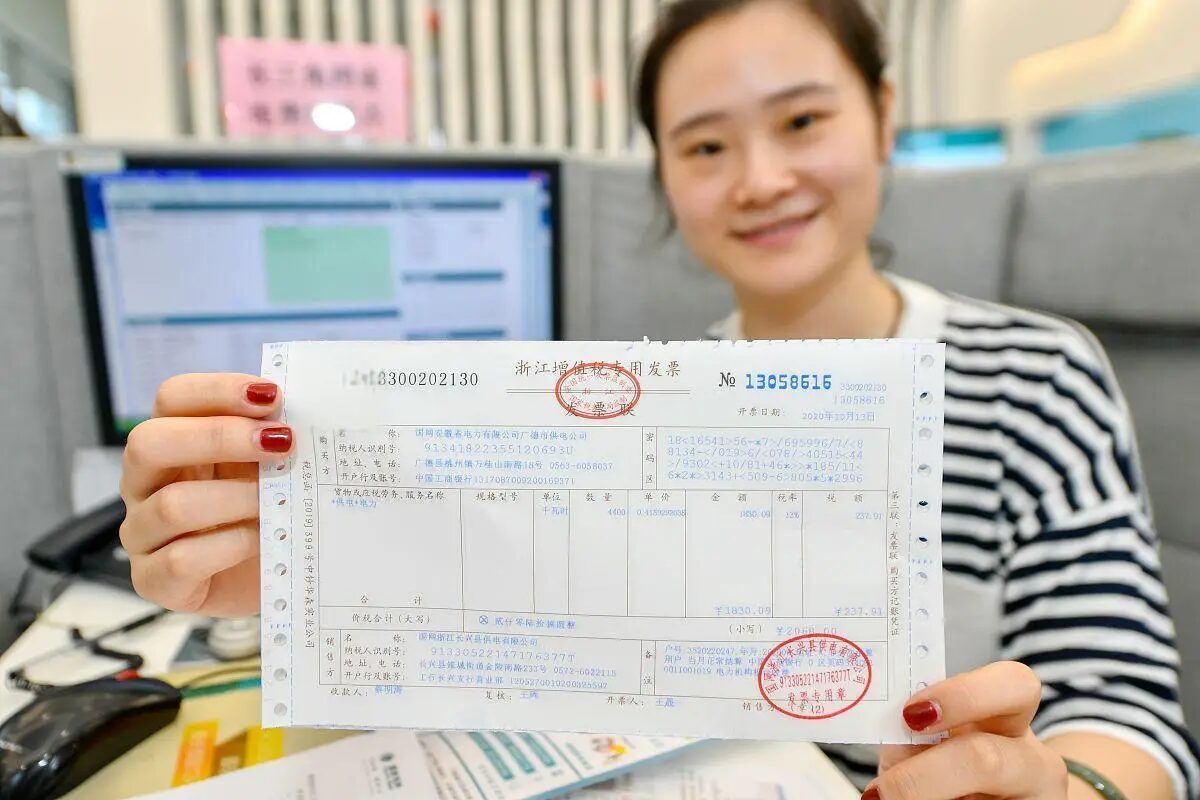
Ask a foreign buyer what proof they hold that a Chinese supplier is a real, tax-registered business, and the answer is often "they sent me an invoice." But an invoice in the everyday sense — a PDF with a logo and a bank account — proves almost nothing in China. What proves something is a fapiao: the official tax invoice issued through, and recorded by, the State Taxation Administration.
The distinction has always mattered. As of 2026 it matters more, because the system behind the fapiao changed twice in quick succession. In December 2024 the fully digitalized e-fapiao went nationwide. On January 1, 2026 China's first unified Value-Added Tax Law took effect. Together they move the fapiao from a paper formality toward a live, checkable record. This week we walk through what a fapiao is, what its two main types tell you, and where it fits — and where it stops — as verification evidence.
A fapiao is not a receipt
In most markets, "invoice" and "receipt" are loose terms for a document that records a sale. In China the word that carries legal weight is fapiao (发票). It is the official tax invoice issued and managed under the State Taxation Administration's system. A receipt — a shoufu, a payment confirmation, a stamped slip — shows that money changed hands. A fapiao is the instrument the tax system recognises: it documents a taxable transaction, supports the seller's VAT reporting, and is the basis for accounting, reimbursement, and tax deduction.
For a buyer, the practical consequence is straightforward. A supplier that issues a proper fapiao is a business operating inside China's tax system, declaring the transaction to the authorities. A supplier that offers only a "receipt" or a plain commercial invoice, and resists issuing a fapiao, is telling you something — that the sale may sit outside the formal tax record, or that the entity you are dealing with is not the one positioned to invoice it.
Special versus general: the type tells you something
Not every fapiao is the same, and the difference is informative. There are two principal categories, and which one a supplier can issue says something about how it is registered.
A general VAT fapiao records the transaction but does not let the buyer deduct input VAT. It is the everyday invoice — typical of business-to-consumer sales and of small-scale taxpayers below the registration threshold.
A special VAT fapiao carries more. It separately states the tax amount and allows a general-taxpayer buyer to deduct input VAT against its own output VAT. Issuing one is restricted: broadly, it is available to general taxpayers — companies above the turnover threshold, or those that have voluntarily registered for general-taxpayer status. A supplier that can issue a special VAT fapiao for your order is signalling that it holds general-taxpayer registration and is set up for genuine business-to-business trade.
This is not a guarantee of anything beyond tax status. But it is a data point that is hard to fake, because the type of fapiao a company can issue is tied to its registration with the tax authority, not to what it prints on a letterhead.
What digitalization changed
The fully digitalized e-fapiao — China's term is the rather grand "fully digitalized electronic invoice" — completed its nationwide rollout on December 1, 2024, when the State Taxation Administration confirmed that all taxpayers, not just pilot participants, could issue it. The STA has affirmed that the digital e-fapiao carries the same legal status as the paper version.
The shift is not cosmetic. A digitalized fapiao is generated and logged centrally rather than printed from a pre-allocated paper book. The STA operates verification tools — including a "Fapiao Reader" for checking electronic special VAT fapiao — that let a holder confirm an invoice exists in the tax system and matches its stated details. In effect, the authenticity of a fapiao is now something that can be checked against the issuing authority's own records, rather than inferred from the look of the document.
For a foreign buyer, that is the meaningful change. A fapiao is no longer just a document the supplier hands you; it is a record the supplier created in a government system that can be queried.
Why 2026 is the turning point
December 2024 was the technology. January 2026 is the law.
On December 25, 2024 the Standing Committee of the National People's Congress passed the Value-Added Tax Law of the People's Republic of China — the country's first VAT statute, replacing the provisional regulations that had governed the tax since the 1990s. It took effect on January 1, 2026. With it, e-invoicing moves from being a technological tool into the legal framework of the tax system itself. One consequence widely noted by tax advisers: the authorities can now monitor invoicing in close to real time. That capability rests on the State Taxation Administration's Golden Tax System — now in its fourth phase, the digital backbone that connects invoice data with business-registration and other government records rather than tracking invoices in isolation.
The combined effect for verification is this. The fapiao your supplier issues is a legally defined instrument, generated in a centralised system, logged as it is issued, and checkable against the tax authority's records. That is a materially stronger evidentiary base than a printed invoice ever was — and it is new this year.
What the fapiao trail proves — and what it does not
It is worth being precise about the limits, because a fapiao can be over-read as easily as it is under-read.
A genuine fapiao confirms that a transaction was declared to China's tax system by an entity registered to issue it. A special VAT fapiao additionally confirms general-taxpayer registration. Digitalization makes both checkable rather than assumed. That is real evidence, and more of it than buyers usually credit.
What the fapiao does not tell you is whether the entity that issued it is the entity you believe you are dealing with. A trading company can issue a valid fapiao for goods it sources from an undisclosed upstream factory. A holding company can invoice for work done by a separate operating entity. The fapiao is authentic; the question of which legal entity stands behind your order, and whether it is the one with the manufacturing capacity and the track record, is a separate one. The invoice confirms a tax event. It does not map the corporate structure.
This is the layer independent verification adds. Reading the fapiao trail tells you a transaction is real and declared. Reading the entity behind it — the registration, the shareholder structure, the operating scope, the gap between the company that invoices and the company that produces — tells you who you are actually trading with. A Sinolinks verification report sets the tax and registration record against the operating reality behind a supplier, so the entity on the invoice and the entity behind the order can be checked against each other.
The fapiao is a stronger starting point in 2026 than it has ever been. It is still the starting point, not the conclusion.
Further reading
For how the public registry behind a supplier's capital and ownership data is changing, see What changed in NECIPS for 2026, and for the annual filing window that refreshes that data, The SAMR annual filing and what buyers should watch.
The tax-registration and general-taxpayer status that a special VAT fapiao reflects are part of the entity record behind large mainland manufacturers — the kind carried on verification pages such as Foxconn Precision Electronics (Taiyuan) Co., Ltd..
Sources
- State Taxation Administration (STA / 国家税务总局): chinatax.gov.cn — issuing authority for the fully digitalized e-fapiao and operator of fapiao verification tools
- China Briefing (Dezan Shira & Associates), E-Invoicing Push in China: The Fully Digitalized E-Fapiao Program — nationwide rollout effective December 1, 2024; all taxpayers eligible; equal legal status to paper fapiao
- KPMG China, New Regulations Unveiled, Ushering in a New Era for China VAT (January 2026) — VAT Law implementation; e-invoicing integrated into the legal framework
- Baker McKenzie, China Tax Updates – VAT Law Implementation Rules (January 2026) — Value-Added Tax Law effective January 1, 2026, replacing the provisional regulations
- Hawksford, Understanding Fapiao: the key to invoicing in China — fapiao versus receipt; special versus general VAT fapiao; general-taxpayer requirement for special VAT fapiao
- Standing Committee of the National People's Congress — passage of the Value-Added Tax Law of the People's Republic of China on December 25, 2024
- China Briefing (Dezan Shira & Associates), China's Golden Tax System Phase IV: An Explainer — STA-led digital tax administration connecting invoice data with business-registration and other government records